
I’m an English-speaking psychotherapist in Tel Aviv, and I also work online. My approach isn’t frozen. It keeps growing as I learn and as I meet more people.
I don’t arrive with one ready-made method. We look at your situation and your taste together, and we choose what fits. Some people want depth and some want tools for next week. Most need a bit of both.
The therapeutic relationship is the foundation of good therapy. There’s no point talking about technique if there’s no respectful, caring connection between us.
I want this to be a place where you can put down what you carry, through laughter, tears, grief or growth. Without a real bond, meaningful work can’t happen. Either we are a team, or we are not.
A strong relationship plus the right tools makes room for brave, honest work with whatever life brings.
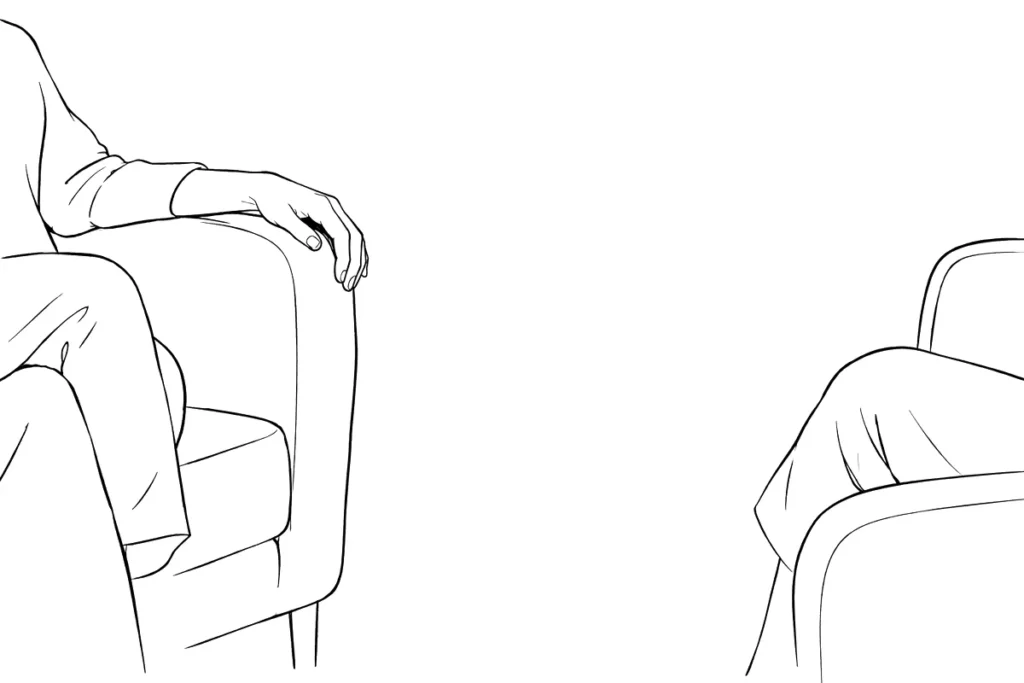
Existential psychotherapy is the base of how I work. It deals with the big questions every person meets: freedom and choice, loneliness, the fact that life ends, and meaning.
We don’t sit around discussing philosophy. We talk about the job that stopped feeling right, or the feeling that your life is happening to someone else. Those are existential questions in everyday clothes. The aim is a life that’s yours, even when that’s uncomfortable.
“Part of me wants to, and part of me doesn’t.” Most of us know that sentence. Internal Family Systems (IFS) takes it seriously.
We all carry parts: the pleaser, the critic, the one that runs, the one that got hurt long ago. Each of them is trying to protect us. We don’t fight them. We get to know them.
It helps with people-pleasing and with a harsh inner critic.
Depth matters. So do practical tools you can feel the next week.
CBT helps us catch the thoughts that keep a pattern going. Take “if it’s not perfect, it’s a failure.” We look at it together and swap avoidance for small steps.
ACT helps you stop letting hard emotions run your life. We get clear on what matters to you, and you move toward it even when it’s hard.
Freud helps us look at early relationships and at how we learned to protect ourselves. Those patterns come back in love and at work. Sometimes they show up in the therapy room too.
Jung brings shadow work: meeting the parts of ourselves we pushed away. He also reminds us that part of our story belongs to culture and family. Together we sort out what’s yours from what you inherited.

Some of the work happens in the body. I teach breathing, muscle relaxation, guided imagery and meditation, including non-dual meditation.
These are tools to take home. Use them before a hard conversation, or on a night that won’t end.

For people who connect to it, I bring in philosophy too. The Stoics (Marcus Aurelius, Epictetus, Seneca) help us tell apart what we control from what we don’t.
Nietzsche, Frankl and Yalom help us look for meaning inside suffering. Buddhist philosophy and non-duality bring us back to a simple question: who am I?
Religious thought has a place here as well. The idea of the dark night of the soul can help make sense of a crisis that feels empty.
None of this is required. It’s one more language, for those it speaks to.
Every therapy is built around the person sitting across from me. My goal is to help you build a life that feels balanced and your own. One where you stand on both feet and meet what comes with steadiness and courage.